Lost in Translation: How Communication Breaks Down in Relationships & How Therapy Helps | The Therapeutic Space
Struggling with communication in your relationship? Learn why couples disconnect, common communication patterns, and how therapy can help rebuild connection.
7/8/20264 min read
Lost in Translation: When Communication Breaks Down in a Relationship
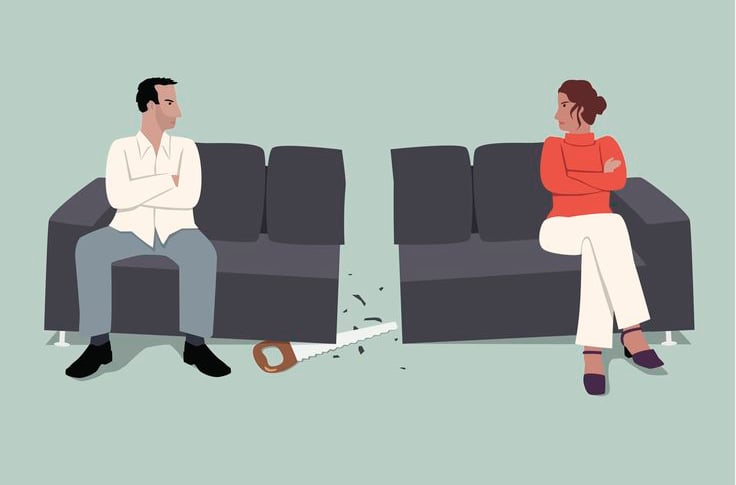
There's a particular kind of loneliness that nobody warns you about. It's not the loneliness of being single or being alone. It's the loneliness of sitting in the same room as someone you love and feeling completely unreachable. You're talking. They're talking. But somehow, nothing is actually getting through.
If that sounds familiar, you're not alone. Communication breakdown is one of the most common reasons couples struggle to maintain their relationships.
It Rarely Starts With a Big Fight
Most people imagine communication problems as loud and constant arguments, slamming of doors, things said that can't be unsaid. And yes, that's one version of it.
But more often, it starts quietly. One person stops bringing something up because the last time they did, it turned into a fight. The other person stops asking because they sense they're not really wanted in that conversation. Slowly, you start having fewer real conversations.
And then one day you look at each other and realize you haven't actually talked in months. Maybe longer. That quiet drift is just as serious as the loud kind of breakdown. Sometimes more, because it's easier to ignore.
Why Communication Breaks Down
Understanding why it happens is the first step to doing something about it. And the reasons are almost never as simple as "we're just incompatible" or "they never listen."
We learn how to communicate- or not communicate- from the families we grew up in. If you grew up in a home where conflict was avoided at all costs, you probably learned to swallow things rather than say them. If you grew up where arguments were loud and frequent, you might have learned that raising your voice is the only way to be heard. Neither of those patterns is your fault. But both of them will show up in your relationship if you don't become aware of them.
We assume our partner should just know. "If they loved me, they'd understand without me having to explain." This is one of the most common and most damaging beliefs in relationships. We expect our partners to read our minds, and when they don't, we take it as evidence that they don't care. They, meanwhile, have no idea what they've missed.
We confuse the surface argument with the real one. Underneath almost every recurring conflict is a deeper, quieter need- to feel respected, to feel prioritized and to feel safe. When couples argue about the surface issue without ever noticing what's underneath, they can have the same fight for years without resolution.
We stop feeling safe enough to be honest. Communication breaks down not just because people don't know how to talk, but because somewhere along the way, one or both people stopped feeling safe enough to be vulnerable. Maybe their honesty was met with defensiveness. Maybe they were shut down or dismissed. Maybe they tried to bring something up and it exploded. So they stopped trying. And the real thoughts and feelings went underground.
What Poor Communication Actually Looks Like Day to Day
It's worth naming the specific patterns, because they're easy to miss when you're in the middle of them.
Stonewalling- Shutting down completely during a difficult conversation. Going silent, leaving the room, looking at your phone. It feels like self-protection but the other person experiences it as abandonment.
Criticism versus complaint- There's an important difference between "you never help around the house" and "I've been feeling overwhelmed this week and I need more support." The first is an attack on character. The second is an honest expression of need. Most of us default to the first when we're hurt, even though it almost always makes things worse.
Deflection - This is when one person raises a concern and the other immediately turns it around. "You think I don't help? What about everything I do that you never notice?" The original issue never gets addressed. Both people feel unheard. The conversation ends in frustration or silence.
The silent treatment - This is used as punishment, as a way of expressing hurt without having to be vulnerable about it. It feels powerful at the moment. But over time it damages trust and creates a sense of emotional unsafety in the relationship.
Conversations that only happen through arguments- This is when the only time real feelings come out is when someone has already lost their temper. Because that's the only moment the walls come down enough to say what's actually true.
How Therapy Helps Specifically
Couples therapy doesn't just give you a space to vent, it also does something more specific and more valuable.
It slows everything down. The conversations that usually happen at high speed and high emotion happen differently in a therapist's room. There's structure and a pace. Both people get to finish a thought. That alone changes things.
It helps you understand what you're actually trying to say. A therapist will often reflect back what they're hearing from both sides in a way that gets to the real feeling underneath. Suddenly your partner hears "I've been feeling alone in this." instead of "you never support me". That is interpreted completely differently.
It identifies the patterns you can't see when you're inside them. From the outside, a trained therapist can spot the specific loops or patterns of your communication- who shuts down, who deflects, who escalates. Once you can see the pattern, you can start to change it.
It gives you new tools. How to raise something difficult without it becoming an attack. How to listen without immediately defending yourself. How to express a need clearly. These are learnable things, and most of us were simply never taught them.
You Don't Have to Wait Until It's Critical
If your relationship has any of the patterns described in this blog- the repetitive arguments, the quiet distance, the conversations that never quite say what they mean- you don't have to wait until things are at breaking point to do something about it.
Therapy is available both online and in person, and couples counselling specifically doesn't require a crisis to be worthwhile. Sometimes the most useful thing is to get support while there's still plenty of goodwill between you, before the distance becomes too wide to bridge easily.
The fact that you're reading this suggests you care about the relationship enough to think about it. That caring is what therapy needs to work with.
Use it.
The Therapeutic Space © 2025. All rights reserved.
We care deeply for your mental health, but The Therapeutic Space does not provide emergency or crisis support.
If you or someone you know is in immediate danger or requires urgent help, please contact the national mental health helpline at 1800-599-0019, reach out to suicide helplines, or visit your nearest hospital or emergency center for immediate assistance.