Do I Need Therapy? 6 Signs You Shouldn’t Ignore | The Therapeutic Space
Wondering “Do I need therapy?” Learn the signs that indicate it may be time to seek support, understand your emotions, and improve your mental health.
7/8/20264 min read
Do I need therapy? Signs you shouldn’t ignore
Most of us are experts at convincing ourselves we're fine.
"I'm just stressed- work has been too hectic." "Other people have got it way worse" "It will be fine on its own." Sound familiar? The truth is that many of us find it easier to talk ourselves out of getting help rather than actually getting it. And somewhere in that gap- between the feeling that something is not right and the moment we decide to do something about it- we carry way more than we need to.
If you've ever found yourself relating to the "5 signs I need therapy" reel at 11pm after you’ve had a long day, this post is for you. Not because you're broken, but because merely wondering about this shows that some part of you is paying attention.
So here are some actual signs that this might be the right time to seek professional help- signs you should not ignore.
Your Emotions Feel Too Much or Too Little
Emotions are not just happy and sad, they exist on a spectrum, and therapy often becomes a necessary intervention at both the extremes.
On one end, there's the emotion of overwhelm: anxiety that stays with you 24/7, anger that comes out faster than you can control it, sadness that doesn't seem to have a clear reason or an end date. When your emotional responses do not make sense according to what's happening around you, or when you feel like you're constantly worried when the next wave of these emotions will come- that's your nervous system asking for support.
On the other end, there's the numbness. An emotional state when it becomes hard to feel joy, connection or motivation. You go on with your life- all the highs and lows, but nothing quite hits you. This kind of emotional absence is just as meaningful as emotional intensity, and needs as much support.
Remember- neither extreme is a flaw of your personality. Both are signs worth listening to.
It's Starting to Affect Your Daily Life
Mental health doesn't just stay inside your head- it shows up everywhere. In the quality of your sleep, your ability to concentrate at work. It decides whether you return texts, cook meals or leave the house on weekends.
If you've noticed that a constant feeling of worry keeps you up at night, or that low moods are affecting your performance, or that you have started withdrawing from the people and activities you used to enjoy, all these are signals that your mind is not in the right health. When your inner world starts causing disruptions in your outer life, that's one of the clearest signs that talking to a professional is a need.
You're Relying on Unhealthy Coping Mechanisms
Before we even recognize that we're struggling, we have a tendency to develop some ways to manage that struggle without directly addressing it. Maybe it’s compulsive scrolling for hours, overworking to avoid facing your thoughts, an extra drink (or three) to “ease the mind”, emotional eating or isolating from the people you’re close to.
None of these make you a bad or incompetent person- they make you human. Coping mechanisms only exist because they work for our mind, at least in the short term. The problem arises when they become the only way you can get through the day. This is when they’re telling us that there is something deep within our mind that needs to be addressed.
You Keep Repeating the Same Patterns
Have you noticed a pattern? Does the same argument show up in every relationship? Do you self-sabotage right when things start going well every single time? Do your thoughts spiral the same, leading you back to the same dark place, no matter how many times you've tried to fight it?
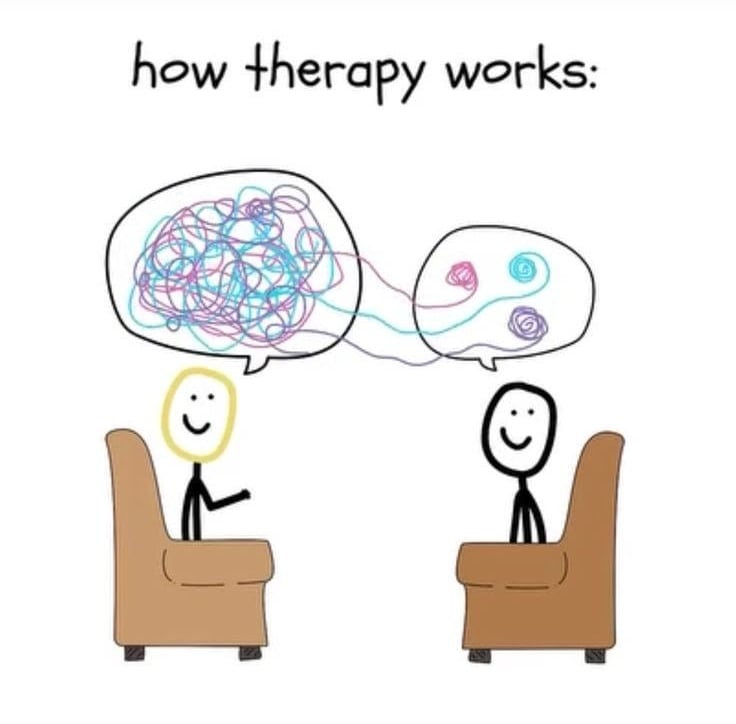
Recurring patterns in relationships, in behaviour and in thought are one of the most compelling reasons to seek therapy. Not because you will be stuck with them forever, but because it is often difficult to see through these patterns. A therapist will offer an objective perspective that can help you finally understand this loop and how to step out of it.
You've Been Through Something Hard and Haven't Processed It
It is common to assume that “time heals everything”, that we'll naturally move on with time. Sometimes that's true. But most of the time, difficult experiences don't disappear with time; they just get repressed. It could be anything- a loss, a breakup, a health scare, a period of intense burnout or a childhood experience you've never fully examined. These things have a way of staying in the body and our mind even long after we think we've "dealt with them."
If there's something in your past that you still avoid facing or still feel the weight of, it may be worth exploring this with someone who is trained to help you process it in a safe manner.
You Just Feel Like Something Is Off
This one sign may be the most important to remember: you don't need some diagnosis, a crisis or a story “dramatic” enough to "qualify" for support. You don't need to be at rock bottom.
Sometimes the sign is simply that quiet, persistent feeling that you don’t feel like yourself. That life feels heavier than it should. That you're tired in a way sleep isn’t able to fix. That feeling alone is valid and enough. And it's worth exploring.
Therapy Is Not a Last Resort
One of the biggest misconceptions about therapy is that it's only for people who are “really” struggling. In reality, there is no scale or measure which can determine who is qualified for therapy. Truth is, therapy is for everyone- anyone who wants to understand themselves better, move through a difficult period, or simply have a space where they don't have to act like they are okay.
Seeking help is not a sign that you have failed to cope with life’s struggles. It's a sign of strength and acceptance.
At The Therapeutic Space, we believe that everyone deserves access to thoughtful and compassionate support, no matter where they are in their journey. Whether you're in the middle of a crisis or simply feeling like something's a little off, we're here for you.
You don't have to be sure. You just have to start.
The Therapeutic Space © 2025. All rights reserved.
We care deeply for your mental health, but The Therapeutic Space does not provide emergency or crisis support.
If you or someone you know is in immediate danger or requires urgent help, please contact the national mental health helpline at 1800-599-0019, reach out to suicide helplines, or visit your nearest hospital or emergency center for immediate assistance.