Signs Your Relationship Needs Therapy Immediately | 8 Warning Signs | The Therapeutic Space
Is your relationship struggling? Discover 8 signs your relationship may need couples therapy and learn when professional support can help rebuild connection.
7/8/20265 min read
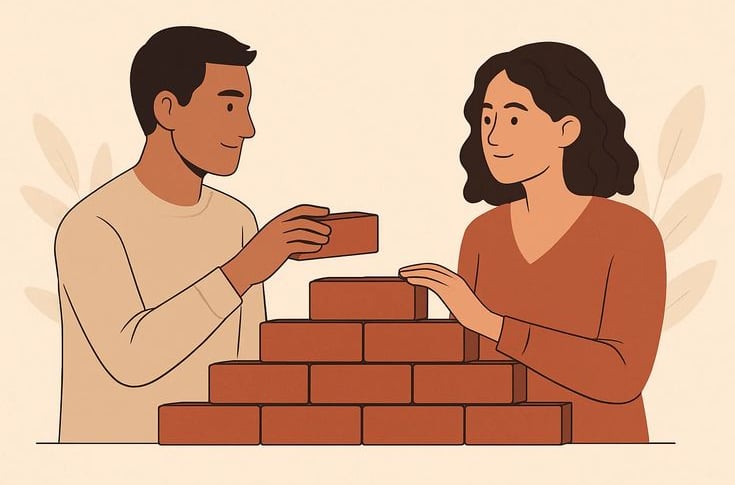
Signs Your Relationship Needs Therapy Immediately
Every relationship goes through rough patches. That's not some “sign from the universe” that it’s not working out anymore- it just shows that two humans are trying to build something together, and in the real world, that's never perfect. But sometimes, a rough patch is not just another phase- it becomes a pattern. And that's when it's worth asking an important question: do we need help?
This isn't about blame. It's not about deciding who's right or who's wrong. It's about recognizing that you have hit a wall that love alone isn't enough to break through.
"But Is It Really That Bad?"
This is the question most couples ask themselves before they consider therapy. But in most cases, this very question is what keeps them from actually going to therapy until things have gotten much worse.
Here's the truth: you don't have to be on the edge of a breakup to go to couples therapy. That would be like refusing to see a doctor until you're in the emergency room. Therapy works best when there's still enough goodwill in the relationship left to build on- when both people still want things to get better.
So instead of asking "is it bad enough for therapy?" ask yourself: is our relationship causing either of us consistent pain? If the answer is yes, that's already enough of a reason.
The Signs Worth Paying Attention To
1. The Same Fight Keeps Happening Over and Over Again
You've had this argument before. Many times. About money, about his family, about how she never listens, about whose turn it is to take the load. It never gets resolved. It just fizzles out until the next time.
When the same conflict keeps coming back, it usually means there's something underneath it that neither of you has been able to name or address. Therapy helps couples get underneath the surface of the argument to the real issue which is usually much more solvable.
2. You've Stopped “Really” Talking
You still communicate. You discuss dinner plans and whose parents you're visiting this weekend and whether the water bill has been paid. But you can't remember the last time you talked about something real- how you're both feeling, what you're scared of, what you actually want from life together.
When a relationship quietly shrinks down to this, it's a sign that one or both of you has started avoiding the vulnerability of real connection. That distance, if it continues, becomes very hard to close on your own.
3. Every Conversation Turns Into a Fight
It doesn't matter how it starts. Someone makes a comment, the other one takes it the wrong way, and suddenly you're in a full argument about something that has nothing to do with the original topic. You're both constantly defending yourself. You feel like you can't say anything without it being taken badly.
When communication has broken down to this level, it's a sign that there's a lot of unspoken things between you. A therapist can help create a space where both of you can speak and actually be heard, probably for the first time in a while.
4. There's Been Infidelity- Emotional or Physical
This is an obvious one, but it's worth saying clearly: if there has been a betrayal of trust, whether that's physical or emotional, therapy isn't optional. It's necessary.
Trying to move past infidelity without proper support almost never works. The hurt partner ends up swallowing pain they haven't really processed. The other partner doesn't fully understand the damage they've caused. And without a guided space to work through it honestly, the resentment just builds quietly underneath the surface.
5. One of You Has Checked Out Emotionally
There's a particular kind of distance that's harder to name than a fight. It's when one person in the relationship has quietly started to withdraw. They might not necessarily be planning to leave, but they are no longer fully present either. They've stopped investing. The warmth is gone.
This can happen gradually after years of feeling unheard, unappreciated, or constantly criticised. By the time the other partner notices, the gap has often become quite wide. If you recognise this in yourself or your partner, getting help sooner rather than later matters a lot.
6. You're Living More Like Roommates Than Partners
You share a home, possibly children, finances, responsibilities. But the closeness- emotional, physical, the sense of being each other's person- has quietly disappeared. You're functional. But something essential is missing and you both know it, even if you haven't said it out loud.
In India especially, couples stay in this stage for years because the structure of the relationship looks fine from the outside. But inside, both people are lonely. That kind of quiet loneliness is worth taking seriously.
7. There's Contempt- Eye-Rolls, Dismissiveness, Sarcasm
Relationship researchers have found that contempt is one of the strongest predictors of a relationship breaking down. It's that eye-roll when your partner speaks. The sarcastic tone. The dismissiveness. The sense that you've started to genuinely disrespect each other, even in small moments.
If you notice this creeping into how you speak to each other or how you speak about each other to your friends and family, please don't ignore it. It's one of the more urgent signs that something needs to shift.
8. You're Staying Together Only for the Kids, Family Pressure, or Fear
This is an honest and difficult one. A lot of couples in India stay in relationships not because they want to work on them, but because leaving feels impossible. The family will be disappointed, the children will suffer, the society will judge. These are real pressures and they deserve to be acknowledged.
But staying together only for these reasons, without doing any work on the relationship itself, often means two unhappy adults raising children in a tense, loveless home. Therapy won't necessarily save every relationship, but it can help you both figure out what you actually want, what's worth fighting for, and what a healthy path forward looks like, together or separately.
A Note on Seeking Help in India
Couples therapy in India still carries stigma. Going to therapy as a couple is often seen as admitting your marriage has failed- when actually, it's the opposite. It's choosing to fight for it.
If walking into a counsellor's clinic together feels too exposing, online couples therapy is a genuinely good option. It's more private, often more affordable, and just as effective for most of what couples need to work through.
And if your partner is reluctant? That's worth bringing to a therapist yourself, even individually. You'd be surprised how much can shift when one person in a relationship starts doing their own work.
The Thing Nobody Tells You About Couples Therapy
A lot of people go into couples therapy expecting the therapist to tell them who's right. That's not how it works and honestly, it's not what helps.
What a good therapist does is help both of you understand what's actually happening beneath the surface of your arguments. They give you a space where you can say the things you've been unable to say at home. They help you hear each other, maybe for the first time in years.
It's not easy. Some sessions will feel uncomfortable. You'll probably have a difficult conversation or two on the drive home. But that discomfort is often the first sign that something real is finally being addressed.
You Don't Have to Be Falling Apart to Ask for Help
That's the most important thing to take away from this. Therapy isn't a last resort. It's not an admission of failure. It's two people deciding that their relationship is worth the effort of doing something about it properly, with support.
If any of these signs felt familiar, don't push that feeling away and carry on. Talk to your partner about it. Or talk to someone else first. But do something with it.
A relationship that once made you happy deserves the chance to do that again.
The Therapeutic Space © 2025. All rights reserved.
We care deeply for your mental health, but The Therapeutic Space does not provide emergency or crisis support.
If you or someone you know is in immediate danger or requires urgent help, please contact the national mental health helpline at 1800-599-0019, reach out to suicide helplines, or visit your nearest hospital or emergency center for immediate assistance.